


The end of privacy in Sweden? The government demands backdoors in Signal and WhatsApp
What’s happening in Sweden?
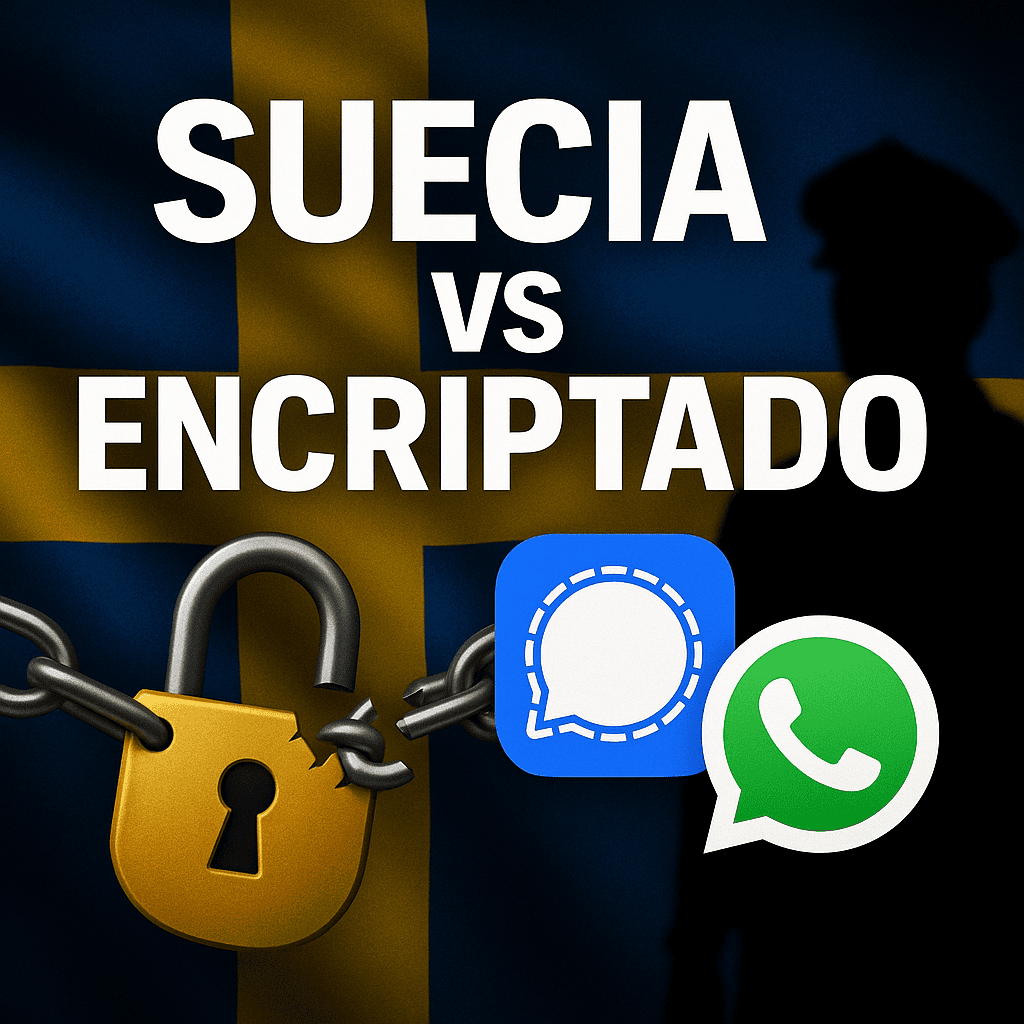
Sweden is getting ready to vote on a bill (“Datalagring och tillgång till elektronisk information”) that aims to force all messaging services —including Signal, WhatsApp, iMessage and the like— to give the Police and Säpo (Säkerhetspolisen) the technical ability to read encrypted messages. The draft was published by the Ministry of Justice on November 22, 2024 and is currently in the final phase of parliamentary debate. (Regeringskansliet)
Key points of the draft
- Total scope: it applies even to “number-independent services” (apps with no mandatory link to a phone number).
- Storage obligation: platforms would have to keep all messages for a minimum period in order to hand them over under a court order.
- Technical adaptation: if end-to-end encryption prevents access, the company would have to “adapt” —in practice, create a vulnerability or backdoor.
Signal’s response
Meredith Whittaker, president of the Signal Foundation, was blunt in an interview with public broadcaster SVT:
“If Sweden passes this law, we will leave the market before weakening our encryption. Creating a vulnerability for one government means opening it to the entire world.” (SVT Nyheter)
Signal has no offices in Sweden, but it could block Swedish IP addresses or pull the app from local stores, replicating the stance it took against similar measures in the United Kingdom and India.
The unexpected twist: the Swedish military also opposes it
In an unusual move, Sweden’s own Försvarsmakten (Armed Forces) warned the Government that the requirement “cannot be met without introducing vulnerabilities and backdoors that third parties could exploit.”(Regeringskansliet) This statement is relevant because the military adopted Signal as an internal channel for unclassified communications in 2024, following the wave of attacks by the Chinese group Salt Typhoon.
What the Government says
The Minister of Justice, Gunnar Strömmer, argues that “effective access to electronic communications is crucial for combating serious crime.” (SVT Nyheter) At a press conference he stressed that the bill tries to balance public safety and individual rights, though the current wording clearly tips the scale toward surveillance.
Risks and precedents
- National security inverted: a backdoor doesn’t distinguish between the “good guys” and the “bad guys.” A door left open for the police is also open for mafias, cyberattackers and hostile governments.
- International domino effect: if Sweden —an EU member with a good human-rights reputation— passes a measure like this, other countries will use it as a precedent.
- Service exodus: the departure of Signal (and possibly WhatsApp) would leave the population without strong encryption options, pushing them toward less secure solutions or clandestine networks.
Recent cases in the United Kingdom (iCloud) and Australia show that when the law demands access, platforms choose to withdraw or degrade features rather than break their security architecture.
Why should it matter to you from Venezuela (or any other country)?
- Global legal precedent: what gets approved in Stockholm can inspire lawmakers in Caracas, Bogotá or Madrid.
- Impact on the diaspora: millions of Venezuelans use Signal and WhatsApp to communicate with their families inside and outside the country. A breach in Europe would affect the security of those conversations.
- Digital rights gap: accepting backdoors normalizes the idea that privacy is optional and accelerates similar initiatives in regions with weaker institutions.
What can we do?
- Inform ourselves and spread the word: share articles from official sources —for example, the Swedish Government’s draft and the military’s letter— to debunk myths.
- Support digital rights organizations: from the Global Encryption Coalition to local projects like vzla.io.
- Use and teach end-to-end encryption: not just in messaging; also in email, storage and calls.
- Take part in public consultations: the European Union and the UN accept citizen comments on regulations that impact privacy.
Official and reference links
- Text of the draft law and status of the process (Government of Sweden) regeringen.se
- Letter from the Försvarsmakten warning about the risks of backdoors (PDF, Jan 17, 2025) regeringen.se – försvarsmakten.pdf
- Interview with Meredith Whittaker on SVT Nyheter (Feb 25, 2025) svt.se
Final reflection Losing encryption is not a “reasonable” price for security; it’s giving up security itself. As a community —both in Sweden and in Venezuela— we need robust systems that protect our rights without creating holes that, sooner or later, others will exploit. Let’s keep the conversation alive and, above all, let’s act.